

Insurance company denying or disputing your injury claim? Call (210) 996-2237 for a free consultation with Caquias Law Group, PLLC. Se habla español.
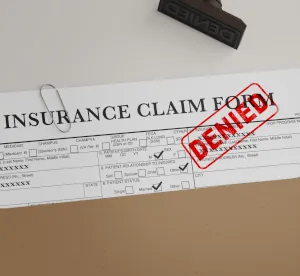
A denial letter from the other driver’s insurance company is not the final word. The adjuster works for the company and its insured, not for you, and the denial is the adjuster’s opinion of who was at fault. When an insurer disputes liability, the question is decided by the evidence. If the claim cannot be resolved, a court or jury decides it.
Common reasons include:
Disputed liability claims are won or lost on evidence, and some of it disappears quickly:
An insurer may admit its driver was partly at fault but claim you were too. In Texas, if you are found more than 50 percent responsible, you cannot recover. Otherwise your recovery is reduced by your percentage of fault (Tex. Civ. Prac. & Rem. Code §§ 33.001, 33.012). Being partly at fault does not, by itself, end your claim.
While fault is disputed, your own policy may provide coverage:
Both are included in Texas auto policies unless rejected in writing.
Most injury claims must be filed within two years (Tex. Civ. Prac. & Rem. Code § 16.003). An insurer’s investigation, denial, or reconsideration does not stop that deadline.
For more on crash claims, see our car accident, 18-wheeler, and drunk driver pages.
If an insurance company denied or disputed your injury claim in San Antonio, Harlingen, or the Rio Grande Valley, and you have a reason to believe you were not at fault, such as a witness, video, photos, vehicle damage, or a police report, call (210) 996-2237 (San Antonio) or (956) 435-7789 (Harlingen) for a free consultation. No fee unless you win.*





Generally, this is not a barrier. Your claim against the at-fault driver’s coverage and any claim under your own policy are handled separately, and the insurer must handle each according to the policy and Texas law.
It can happen. Texas Department of Insurance rules limit when an insurer may refuse to renew a personal auto policy because of an accident you did not cause, but they do not guarantee your rate will stay the same. Ask your insurer or agent how a claim may affect your policy.
Many people describe insurer claim tactics as ‘delay, deny, defend’: delaying payment, disputing liability or injuries, and defending aggressively if a lawsuit is filed. Knowing this helps you avoid common mistakes like giving recorded statements or accepting a quick offer.
Often, yes. Personal injury protection (PIP) coverage on your own policy pays regardless of who was at fault. For underinsured motorist (UIM) coverage, your insurer generally receives credit for the at-fault driver’s liability limits, so UIM applies to damages above those limits. For example, if the at-fault driver has $30,000 in coverage, your UIM coverage would generally apply to damages above $30,000, up to your UIM limit.
Often. Some are surprised positively if they had good coverage, and others negatively if they lacked sufficient coverage like UM/UIM. Many realize they should have had stronger policies to protect themselves.

The information contained in this website is provided for informational purposes only, and should not be construed as legal advice on any matter. The transmission and receipt of information contained on this Web site, in whole or in part, or communication with Caquias Law Group, PLLC via the Internet or e-mail through this website does not constitute or create a lawyer-client relationship between us and any recipient. Past results and client testimonials do not guarantee a similar outcome; each case is different. Read More
Attorney responsible for the content of this website: Tomas A. Caquias of Caquias Law Group, PLLC. Principal office: San Antonio, Texas.
*Attorney's fees and case costs are governed by the client's written fee agreement.
© 2026 Caquias Law Group, PLLC. All Rights Reserved. | Privacy Policy | Legal Disclaimer | Sitemap
 Optimized by Seraphinite Accelerator
